
CG Schmidt: A Century of Building
And Always Carving the Path to What’s Next

Company Overview
Industry
Construction
Challenges
Looking to level up their FCA offerings
Time Using AkitaBox
2 Years
CG Schmidt isn’t new to figuring things out. Fifth-generation and family-owned since 1920, they’re one of the largest construction management firms in the Midwest, serving K-12 education, senior living, healthcare, multifamily, and municipal markets across three offices in Milwaukee, Madison, and Tempe, Arizona.
They were early adopters of lean construction, BIM, and LEED certification. So when it came to improving their facility condition assessment (FCA) service, the question wasn’t whether something was broken. It was whether they could elevate what was already working into something that set them apart.
The Opportunity: Looking for the Next Level of FCA
CG Schmidt has always done quality FCA work. Teams walked buildings with clients, documented conditions, and delivered reports. But like most firms, the process relied on a variety of tools: handwritten notes, phone photos, files stored in an internal intranet, and some reports outsourced to architects. Deliverables were word heavy.
Internally, the appetite was clear: they wanted something visual, centralized, and — critically — something they could put in front of a client as a differentiator.
One differentiator they chose is AkitaBox.
Showing, Not Telling: The Day-to-Day Workflow
Ryan Peschl, Business Development Associate at CG Schmidt, is the person most deeply embedded in AkitaBox day-to-day. Trained on the platform from his first days as an intern, he now leads its use across the company — from field documentation to client-facing reports to business development outreach.
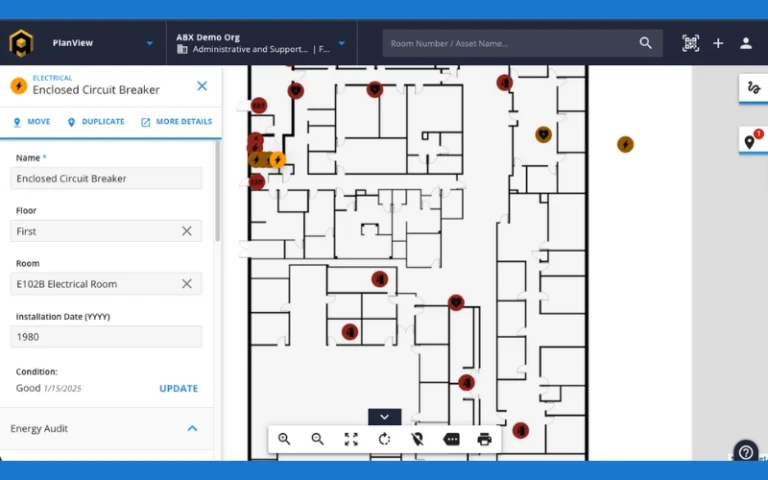
Today, a CG Schmidt data collection “walk” might look like this: Peschl and Brian Medina (Director of Business Development) and other teammates arrive with iPads loaded with the AkitaBox Capture app. They document simultaneously — snapping photos, entering notes, tagging equipment — all while walking the building with the client’s maintenance and grounds crews.
The platform standardized what gets captured on every walk. “Everyone’s on the same page, it centralizes it. We know what we can enter in,” Peschl says.

“Everyone’s on the same page, it centralizes it. We know what we can enter in.”
Ryan Peschl • Business Development Associate

On-line, off-line – for data collection, it doesn’t matter. Once connected to the Internet, data syncs back to AkitaBox. From there, the team sets conditions on assets, applies costs, and builds reports using customizable templates. Those templates can clone and customize from organization to organization — a school district template for one job, a senior living template for another, a multifamily version for the next.
“It’s very easy to take them from one job or organization to another,” Peschl says. “I think beforehand, we would have had to open up a Word file… and kind of create it from scratch, or take an old one and make sure we wipe all the information.”
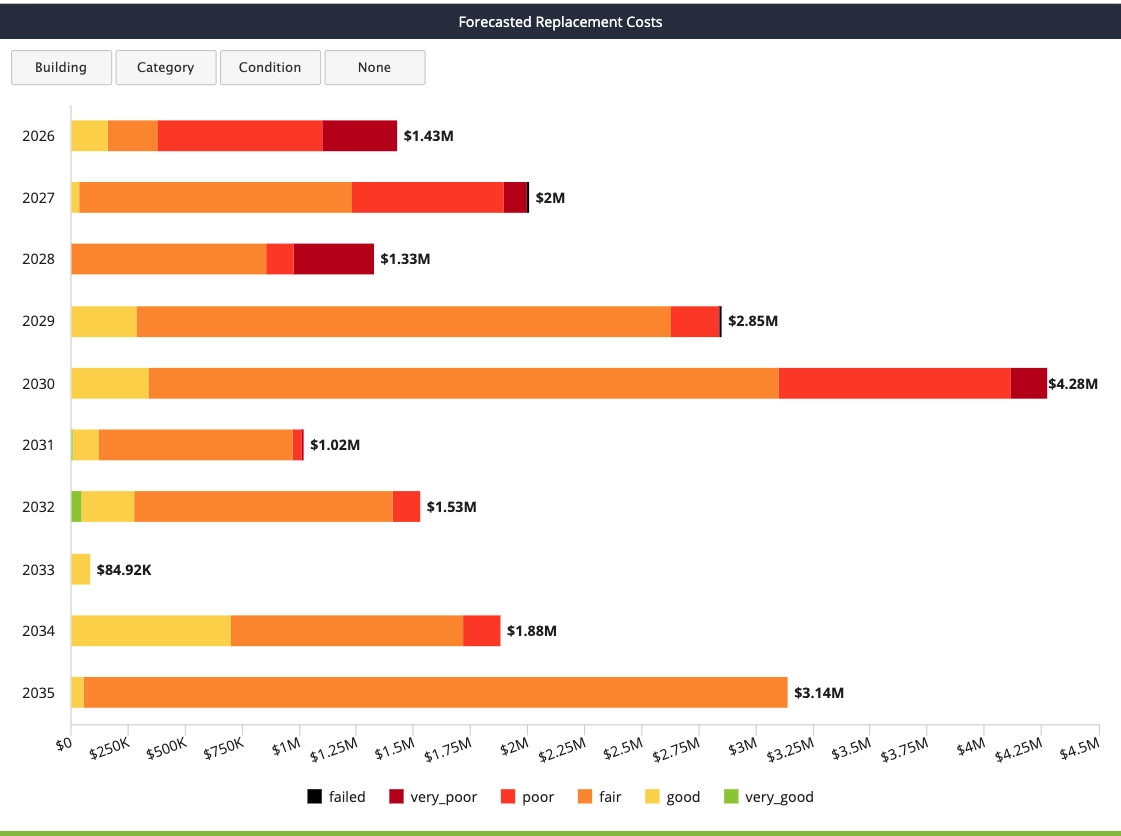
Reports come together through AkitaBox’s Report Builder and Insights dashboards, visual graphs and asset image galleries that make the data tell its own story. For clients who receive viewer licenses, the experience is even more hands-on. They can see live photos, dollar amounts, and prioritize work themselves.
Internal adoption follows the same principle. Peschl sets up a project in AkitaBox with floorplans and invites colleagues in, letting ease of use and the results make the case. With team members in the platform daily and producing visible outcomes, its use is now becoming second nature.
The Platform as Part of the Pitch: AkitaBox as Competitive Advantage
CG Schmidt doesn’t just use the platform for operations. They use it to win work. “An extra incentive of working with us is the software that comes with it,” Peschl says.
AkitaBox is featured in CG Schmidt’s client-facing pamphlet — a booklet they hand to new and prospective clients that highlights their facility assessment process and the tools behind it, giving a high-level glimpse into the platform’s capabilities.
The company also can offer free high level FCAs in AkitaBox as a sales tool as a way to show how they stand out. The client sees how it works, what it could do for their building — and the platform does the persuading. The demo is part of the pitch.
“Not many other places use AkitaBox or something like it, especially for school work,” Peschl says about how AkitaBox is helping their firm differentiate from the competition.
It’s working. The approach has helped CG Schmidt re-engage existing clients with new phases of work and open doors with prospects who are accustomed to lower-tech assessment experiences. Clients are often surprised at the capabilities. “It’s not your average system that people are using on every walk that they’re probably accustomed to, or bored of,” Peschl says.
Results & Impact with AkitaBox
The shift to AkitaBox has given CG Schmidt several tangible outcomes:
Full in-house control of the deliverable. Reports that were previously outsourced to architects can now be handled in house, with the control and ability to make changes. “We can include what we want, and what we want the client to specifically see,” Peschl says.
Visual, interactive reports replace text-heavy documents. Insights dashboards, asset image galleries, and graph-driven storytelling give clients something they can actually use — not just read.
Streamlined field process. A single equipment tag photo captures most needed info. Documentation is focused rather than exhaustive.
Repeatable, scalable templates. School districts, senior living, multifamily — each market has its own template that clones from one organization to the next.
Positive client reception. A report delivered for a public library and city hall project — complete with asset image galleries, Insights graphs, and full platform access — was met with strong reception from stakeholders. The visual, data-forward format put everything in front of decision-makers in a way they could immediately act on.
Scaling Across Teams and Geographies
With the addition of the Tempe office, Peschl onboarded a new hire through a few meetings with AkitaBox’s support team plus hands-on practice. He gave the new team member an old organization to experiment with: “Go in and experiment with the floor plans, with the report… you can change whatever you want, it’s okay, we can change it back.”
Meanwhile, the Madison office has viewer access, and cross-office collaboration is enabled through the platform’s real-time syncing. “Maybe they need our help on a report, maybe something’s due at the end of the day or the end of the week, and it would benefit to have more than just one person on it. AkitaBox lets us do that.”
“An extra incentive of working with us is the software that comes with it.”
Ryan Peschl • Business Development Associate
Looking Forward
CG Schmidt’s next chapter with AkitaBox is about expanding what’s already working. The plan: perfect templates for each market vertical, then introduce the platform to their self-perform team and other internal groups.
More users means more value. The foundation is built. Now it’s about scale.