FCA Software for Architecture, Engineering & Construction
Spend less time on site
Average 30% efficiency gain
Estimate as you assess
Average 50% efficiency gain
Instant reporting
Average 85% efficiency gain

The Only End-to-End Condition Assessment Software
Whether you call it a deferred maintenance study, a capital need assessment, a backlog study, or a facility condition assessment, manage the entire assessment from start to finish in ONE tool.
Collect and organize the onsite data, estimate costs, create your report, and deliver it to your client without ever leaving the software.
Learn More About AkitaBox FCA
Do Your FCAs from Beginning to End in One Tool
With or without AI, your choice
AkitaBox FCA software empowers you to create accurate, compelling assessments.
- Offline-capable field capture: simplifies, standardizes, and speeds up data collection, even when your assessors aren’t connected to the internet
- AI-powered asset identification: snap a photo of a nameplate and extract make, model, serial number, tonnage, and hidden metadata on the fly.
- Multi-assessor synchronization: four people in the field, one dataset, zero conflicts.
- Configurable assessment schemas: Ohio’s 23-point system today, UniFormat level 5 tomorrow, CSI next month, custom the month after that.
- QA/QC workflows: someone back at the office needs to review, flag, and approve before anything goes to the client.
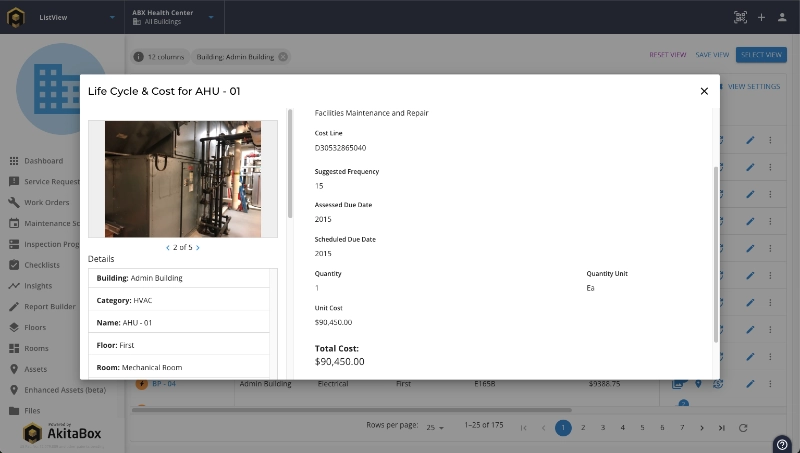
- Cost Estimation: allows you to input your own or draw from industry-standard cost data to create accurate cost estimation
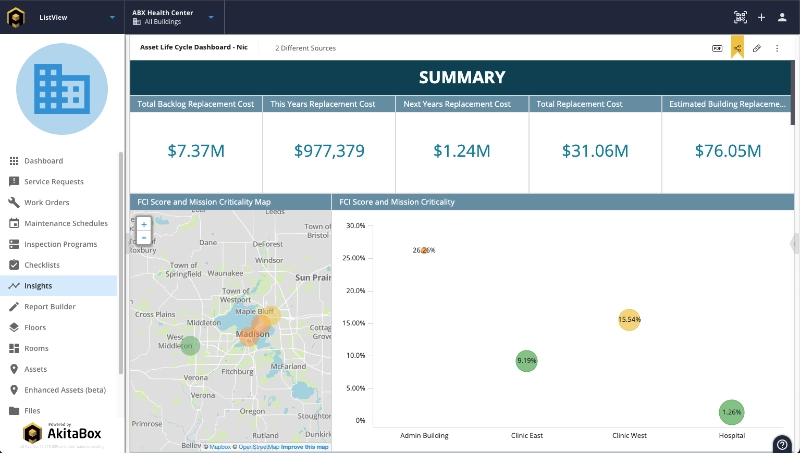
- Insights and capital forecasting: translates the raw data into easy-to-understand, live dashboards
- Client-ready report generation: Visually appealing client deliverables in minutes (that can still be exported to PDF if required).
- Optional: in app chatbot and configurable MCP
Reap Greater ROI
What if you could turn FCAs into an even bigger revenue generator for your firm? Building owners and operators are transitioning away from free FCAs and towards paid assessments done by experienced professionals that provide real long-term value.
AkitaBox FCA helps you capture more opportunities and gain market share by:
- Making you more competitive
- Delivering an interactive FCA of real worth to your client
- Increasing your value to your clients
- Building stronger, longer-term relationships with clients
Improve Your Entire Process
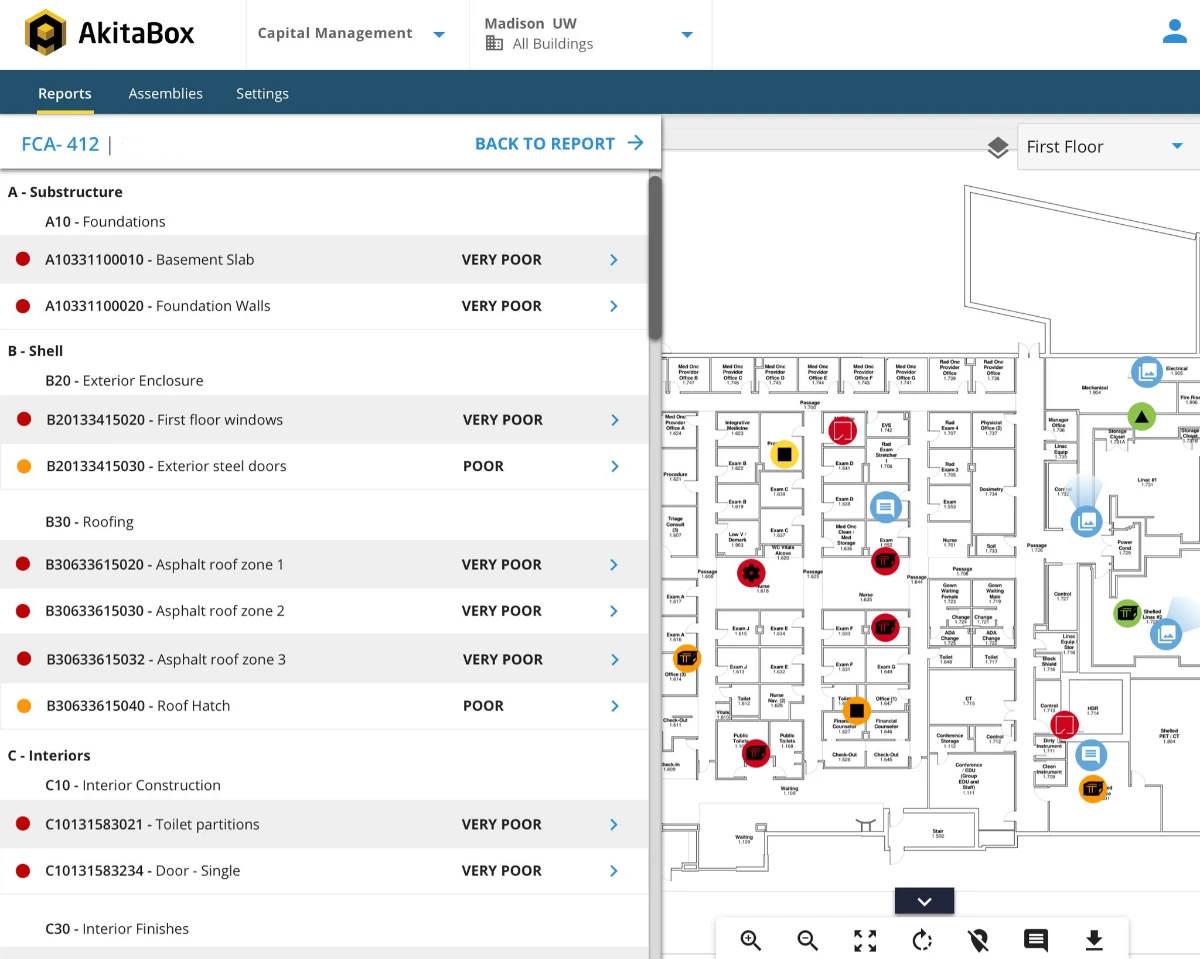
Visualize and interact with your data like never before. Create a living floor plan of every building showing the location and corresponding data of every single asset. Even upload photos and satellite imagery.
Investing in truly innovative FCA software can transform your process, bringing a ripple effect of advantages, such as:
- Time savings
- Better labor forecasting
- Improved use of existing labor
- Decreased risk of forgetting or losing data
- Higher data quality
- Simplified onsite data collection
- Faster offsite data organization with automation

Offer a Better Deliverable to Clients
Monitor inspection programs across your entire organization or drill down into specific buildings, portfolios, or programs to get deeper insights. Provide stakeholders greater transparency to help drive more strategic decision making in a fraction of the time it used to take.
Today’s FCAs are static snapshots of a facility at one moment in time. What if, instead, you could provide a living FCA? One that you can keep adding data to over time? An assessment that brings value to a building owner year after year?
With AkitaBox FCA software, you can:
- Collect more accurate data as a baseline
- Map all assets to a digital floor plan
- Keep data up-to-date over time
- Provide intelligent results and compelling reports