
Tech Veteran KP Reddy recently wrote an article that should make every facilities professional—and every vendor selling AI solutions—uncomfortable:
“Your building knows things. It knows which rooftop unit was replaced in 2019. It knows the manufacturer of the fire suppression system on the third floor. It knows the warranty on the elevator motor expires in four months. The problem is, nobody asked. And even if they did, the answer is buried in a filing cabinet, a decommissioned SharePoint site, or the memory of a facilities manager who retired last spring.”
He’s right. The issue isn’t a lack of data—it’s a lack of memory. But the entire industry is racing toward AI-powered predictive maintenance while skipping the part where you actually know what’s in your building, where it is, and what shape it’s in.
We’ve implemented facility management solutions in over a half billion square feet. The gap between what organizations think they know about their facilities and what they actually know is staggering.
What Does Building Amnesia Look Like?
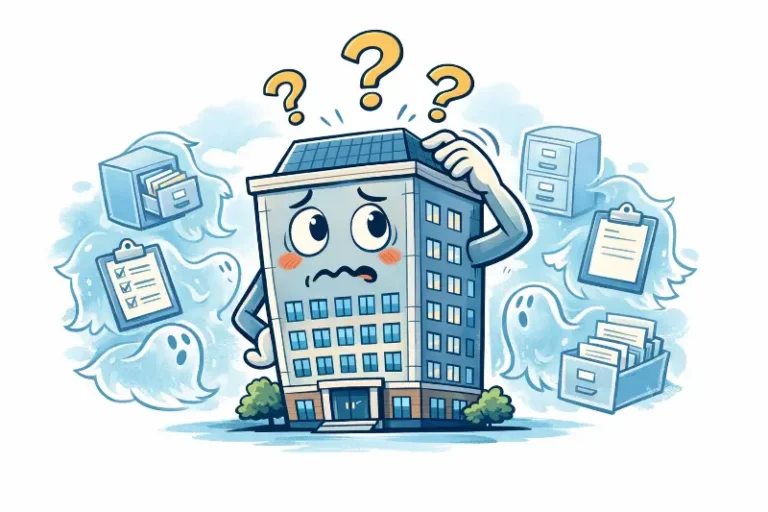
A case of building amnesia looks like:
- Asset inventories that are wildly wrong. Organizations routinely assume they have 20-30 assets per building worth tracking—then discover they actually have hundreds. Most asset counts are educated guesses, often off by a factor of three or four.
- Critical data one accident away from disappearing. We regularly encounter organizations where vital building information lives in shared Excel files, scattered drives, email threads, and the personal knowledge of whoever’s been around longest. One wrong click can delete entire maintenance histories.
- Information that requires a scavenger hunt. When a facility issue arises, getting answers means digging through filing cabinets, driving back to the office, or making multiple phone calls. The friction is constant.
- Floor plans that don’t match reality. Teams face the challenge of not knowing where specific assets are actually located. In complex facilities, navigating quickly to failing critical equipment isn’t a convenience—it can be a life-safety issue.
This is what Reddy calls an “information supply chain failure.” Documentation never gets properly captured or organized at the source—and from that shaky foundation, every work order, vendor call, and maintenance decision inherits the gaps.
The Price of Forgetting Information About Your Facilities

Building amnesia is expensive—in dollars, in time, and in decisions made blind. Here are a few of the examples that customers experienced before coming to AkitaBox:
- The voided warranty nobody knew existed. One organization discovered—after paying for multiple leak repairs and facing a $100,000 roof replacement recommendation—that the roof had been replaced just years earlier with a 20-year warranty. That warranty? Voided by repairs from a contractor who didn’t know about it. The information existed the whole time, buried in a folder system nobody could navigate.
- The reactive trap. “We just waited for something to break, and then we were reactive.” We hear this constantly. Reactive maintenance costs more and causes longer downtimes than scheduled maintenance—but organizations can’t shift to proactive maintenance if they don’t know what they have, where it is, or what condition it’s in.
- The hidden time tax. Compliance testing that should take weeks stretches into months because technicians can’t efficiently locate assets. Accreditation prep consumes weeks of staff time. New employees take months to get up to speed because institutional knowledge lives in people’s heads rather than accessible systems.
4 Items You Need Before Taking Advantage of AI in Facilities
The industry can’t stop talking about what AI will do for facilities management. It’s part of our mission to make sure everyone knows what AI needs to do it.
Before any AI system can predict or optimize anything meaningful, you need:
- A complete asset inventory – Actually knowing what you have, not estimates
- Accurate location data tied to floor plans – Knowing exactly where each asset lives
- Current condition and maintenance history – Real data, not records frozen at installation
- A system that updates dynamically – Not a snapshot that starts decaying immediately
Most organizations can’t answer “what do we have?” let alone “what condition is it in?” The real opportunity isn’t in the analytics layer—it’s in finally getting the data foundation right. Getting the foundation right isn’t the boring prerequisite to the exciting AI stuff. It is the play. Without accurate, structured building data, predictive maintenance is just guessing with extra steps.
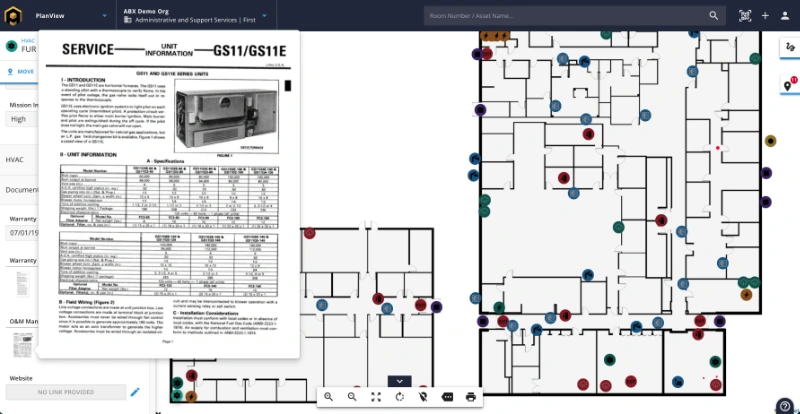
A facility asset in AkitaBox with complete, up-to-date history, costs, mission impact, documentation, and more.
What Changes When Buildings Remember
When organizations commit to solving the memory problem, the results are measurable:
- From guessing to knowing. Facilities teams move from gut-feel decisions to data-driven conversations with leadership. When executives ask “what should we prioritize?” there’s an actual answer based on asset conditions—not whoever argues loudest.
- From reactive to strategic. When technicians can pull up a floor plan, locate an asset instantly, and access its complete service history, maintenance shifts from firefighting to prevention.
- From time sink to efficiency. Compliance testing that took a year can shrink to two months. Accreditation prep that consumed weeks drops to days. New staff can start performing inspections on day one instead of spending months learning where everything is.
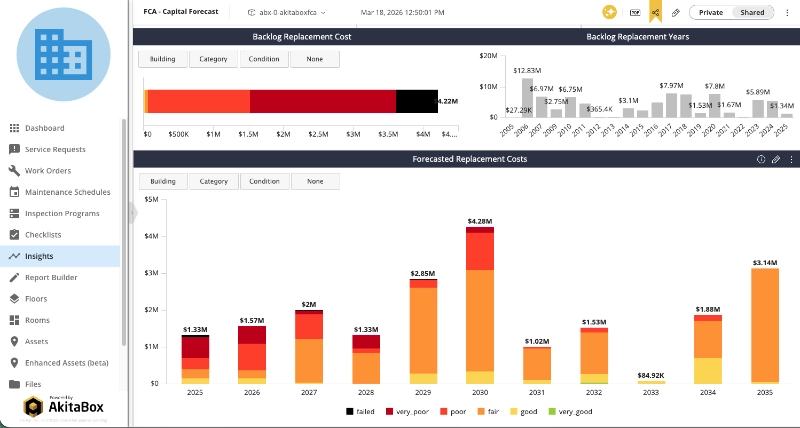
- From silos to shared understanding. When facilities and finance operate from the same accurate data, capital planning decisions get made based on reality rather than assumptions.
The Foundation Comes First
Signs your building has amnesia:
- Asset counts are estimates, not facts
- Documentation requires a scavenger hunt
- Warranty information gets discovered after paying for repairs
- Maintenance is reactive by default
- New staff take months to get up to speed
- When someone asks ‘what’s the model number on that RTU?’ the room goes quiet
If any of these sound familiar, you have a memory problem. No amount of AI will fix it until you address the foundation. The good news is that the foundation IS fixable. Talk to us about how you can get started.